


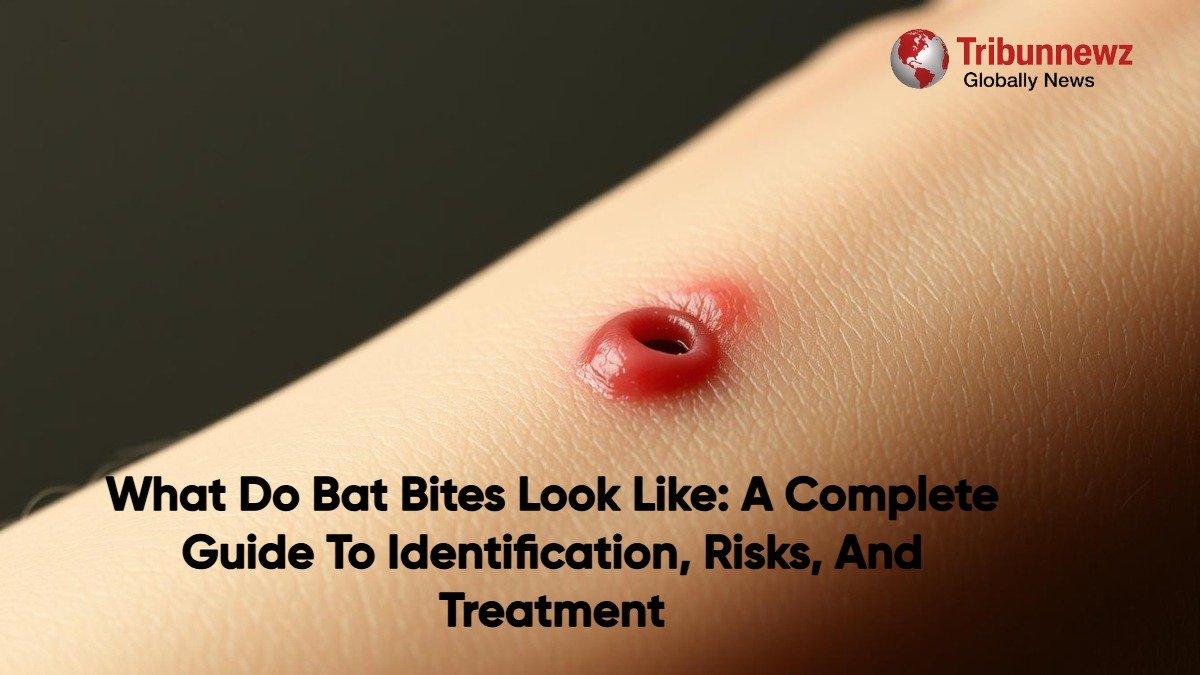
What Do Bat Bites Look Like? The importance of understanding what bat bites look like lies in the fact that these small and it is often invisible wounds, capable of great health risks, are the main outlet. Most people picture a bite as something that would be hard to ignore and very painful, but it turns out that bat bites are able to stay hidden very well. They are usually nonpainful, hard to notice, and very often happen when one is asleep. This characteristic makes them particularly dangerous because rabies and other infections that are spread through saliva are borne by bats.
In the ensuing text, it will be revealed to you the different ways to identify the bites of bats even when the victim is not aware of them, the symptoms that should be monitored, and the prompt action to be taken in case of a suspected contact with the animal. Besides, you will learn about the natural anesthesia of bat saliva, the risky nature of these creatures indoors, and the various methods to secure both your house and family. All of this is done in a clear and friendly manner without losing the medical precision.
How Bat Bites are Displayed on the Human Skin
The bite of a bat generally appears as two small puncture wounds, which may be just a few millimeters apart. These lesions might be very light indeed and quite similar to mosquito bites or small punctures. Because of the wound’s characteristics, it might not cause bleeding or pain, and thus, often people do not realize it till the latter stage when redness or swelling has already set in. The locations where bites occur most frequently include the neck, hands, face, and ankles, particularly during the time a person is sleeping.
The bats’ teeth are very fine and sharp, and only a slight pressure is needed to puncture the skin; however, the bites still pose a risk of the virus getting into the body. The main danger is not so much the size of the wound but rather the presence of pathogens that get into the body through it.
The Numbing Effects of Bat Saliva
Vampire bats, which are one of the most well-known groups of bats, have saliva full of natural anesthetic substances. The indicated action of these substances is to temporarily numb the skin by interfering with the pain conveyance to the brain. National Library of Medicine studies reveal that some bat saliva proteins are able to affect the nerve pathways that are responsible for pain perception. This allows the bat to bite without alerting its host.
How Sensory Nerves Get Tricked
Almost all human-bat encounters happen at night. The senses of a sleeping person are reduced to the minimum level, and as a consequence, a very light touch, a small scratch, or even a bite may not be powerful enough to rouse the sleeping person. A bat could come and go unnoticed by you, and the biting incident could occur even before you get a hint of its arrival.
The Reason for Bites to Happen While Sleeping
Most human encounters with bats occur at night. When a person is asleep, the body’s sensory thresholds are naturally elevated. This means a light touch, scratch, or bite may not trigger a wake-up response. If a bat brushes past your skin or lands near you, the bite can occur before you have any chance to react.
Signs that Can Be Seen on the Skin
Since pain cannot be relied upon, the only way to detect bat bites is through visual symptoms. After a few hours, a person may see very mild redness, slight swelling, or minuscule puncture marks. Sometimes, a clear or mildly yellowish fluid may leak from the bite site, particularly if the skin has been scratched.
Delayed Reactions
A bat bite can trigger an immune response that will lead to itching or tenderness of the skin after several hours. In some instances, slight bruising may develop within one to two days. These symptoms mean that the skin was, in fact, broken even though the bite was not obvious initially.
Rabies Transmission
Around the globe, bats remain one of the primary sources of rabies infections. Any case of rabies, although rare, is always lethal when symptoms become visible. The virus is ingested via saliva, getting into the nervous system, where it can stay inactive for several weeks or even months before it starts to inflict untreatable harm.
Secondary Infections
Apart from rabies, oral bacteria from bats could lead to severe infections. Symptoms indicating that the wound has become a breeding ground for bacteria are redness, fever, swelling, and spreading irritation. In cases where infection is not treated, sepsis can occur, which is a medical emergency, and the patient has to be given immediate attention.
False Security from a Painless Bite
It is the very fact that people do not consider these bites as dangerous or are even completely unaware of them that makes bat bites so risky. In the absence of symptoms or pain, some people might even consider it unnecessary to seek treatment, which, as a result, would allow infections or viruses to develop.
Incidents in Real Life that Reveal the Risk
Medical literature is not without examples that suggest bat bites can be considered a form of neglect. A man in Michigan was living in a garage infested with bugs. Hehe didn’t know that he had been bitten; nevertheless, he got a rabies-like sickness and died because the treatment was too late. Another instance was when a girl from Texas woke up one night and found a bat in her bedroom. The little one did not have any visible injury, but the doctors insisted on rabies shots immediately, and later tests showed that the bat was indeed rabid. Such occurrences show that an encounter with a bat can be silent as well as fatal at the same time.
How to Respond Within Minutes
In case you think that a bat has bitten you or if you found a bat in your room when you woke up, thea n a quick response is needed. To begin with, the affected area must be washed with soap and warm water for at least five minutes. This can significantly reduce viral transmission.
After washing, apply an antiseptic such as povidone-iodine or alcohol to disinfect the area. Document the incident with photos and notes, as this information can be helpful for healthcare providers.
Do not attempt to catch the bat yourself. Contact animal control or a wildlife professional who can safely collect the bat for testing.
Seeking Medical Care Immediately
A health care professional will decide if post-exposure prophylaxis (PEP) is necessary. PEP, when given right away, is nearly 100% successful in stopping rabies. Physicians adhere to rigid CDC protocols, nd even non-visible suspected exposure cases are treated as serious ones.
Keeping Bats Out of Your Living Space
The most efficient method that ensures bats never come in contact with you at all is to keep them out of your house for good. Bats are such expert creepers that they can manage to get in through openings as small as half an inch at the most. Be on the lookout for bats and do a check on the attic, roof-wall junctions, vents, and chimney for indications like poop. The use of caulking or screening can effectively seal off the opening, thus preventing the bats from accessing the house, and in addition, chimney and vent covers can be fitted.
In case you observe any indications of bat presence, like droppings, noise, or chirping, do not try to remove bats on your own. It is better to call for a professional wildlife removal service that is licensed and adheres to humane eviction practices while also observing wildlife protection laws.
Inspection of houses in wooded areas or properties with greater susceptibility to gaps is extremely important.
Why You Should Never Rely on Pain Alone
The silent character of bat bites makes them a great danger. Their pointed teeth and skin-numbing saliva together mean that you cannot use pain as a warning signal. Even a short exposure or a bat in your sleeping room while you were asleep is a sufficient cause to get medical consultation.
If you think of exposure, fast action, right wound care, and immediate medical advice are your best defenses.
Protection of Home and Health
Bats are indeed helpful creatures, but at the same time, they pose health risks when they are inside the house. Being aware of bat bites, the reasons for their being unnoticed most of the time, and the right ways to respond can be a defense for you and your family.
If any bat enters your house or its presence is suspected, the first thing to do is to contact a professional wildlife service. A small bite may go unnoticed, but its consequences can be very serious. Fast action ensures safety, peace of mind, and a neighborhood without any harm done.